Jeremy Scheff poignantly captures the key loss caused by coding agents for career programmers who enjoyed the puzzle of developing code:
Programming turned into one of the greatest jobs you could imagine. You got paid to work on tricky little logic puzzles. The trickier the puzzle, the more you got paid. But even pretty simple puzzles were worth a lot of money because regular people just couldn't do it! No, they needed us. They would give us a problem and we would solve it the way we wanted. We set the strategy, we made the timeline, we defined what was and was not possible.
If you're a programmer who thrives on building working systems and doesn't care too deeply about the problems solved along the way, LLMs are the gift that keeps on giving.
If directly solving those problems was a big part of your enjoyment, the loss is very real.
Such a good opportunity to name the article "It's the end of the math as we know it". Too bad.
Separately, this article offers a good argument for why AI solving a bunch of math problems can actually be a bit troublesome. Mathematicians learn and ask a lot of questions during the journey of solving a problem, the job will now fundamentally change, what can they learn from the AI's journey? Can we learn enough from the result? will we think of new problems and understand why they are interesting? Can AI do that for us?
Their job description has changed in a very short timespan due to this.
I still can't quite tell if this will end up being a good thing or a bad thing, like most things it's probably both.
I've always been kind of into computers since I was young. And then when film started to move from analog film to digital, I became more interested in that aspect of it. And the visual effects workflow for many years has included machine learning.
So I can write like pretty shitty Python scripts and stuff like that because with convolutional neural networks, which were the sort of precursors to what the transformer can do, which is just much more computation simultaneously, you would do things like look at what's called a tensor, which is just the numerical translation of a visual image in numbers — like the batch number, the frame number, the red, green, and blue values of each pixel in each frame.
And a tensor, you use a convolutional neural network to identify patterns in that that would reveal what's called edge detection or feature extraction, which is just identifying patterns enough to know like this is where the window ledge is, so we can more easily take the green screen image out and replace it with something.
Computer programming is, fundamentally, about two things:
Problem-solving using computers
Learning to control complexity while solving these problems
I have a hard time imagining a future where knowing how to solve problems with computers and how to control the complexity of those solutions is less valuable than it is today, so I think it will continue to be a viable career even with the advent of AI tools.
I would like to formally endorse this definition. It's very similar to my definition of good engineers being people who understand complex things, fight complexity, and learn fast.
The Deno team released the first version of celld back in August - their open source implementation of the Durable Objects pattern from Cloudflare Workers.
Today, Cloudflare are acquiring Deno outright, with the goal of building on celld to "make workerd self-hosting a first-class supported way to build and run apps using the Workers programming model" (see the Cloudflare blog.)
The bad news is that Deno itself will not be maintained by Cloudflare beyond the next year:
We will support the Deno runtime for another year with monthly releases containing bug fixes and security updates. After that year we will end our development of the Deno runtime. Deno will remain open source, and we welcome others who want to continue its development.
Deno (and Node.js) creator Ryan Dahl explained that decision in a comment on Hacker News:
It's a joint decision and I agree with it. I'm most invested in its success and have put the most work into it - and I no longer think it's where I can do the most important work. There are some good ideas in Deno and it's well engineered - but it ultimately is not solving big problems. It has been sucked into the gravity well of node compatibility, which forces it to behave exactly as Node does. Why reimplement Node? It works. Marginal performance or UX or security benefits are not enough.
I'm interested in building powerful new abstractions. celld has been working remarkably well, depending only on object storage for coordination and persistence. It is not just a slightly different API to interact with the file system or network - it's an entirely new model for server development.
My favorite feature of Deno has long been the permissions system, where you can run a Deno script and specify exactly which files and folders it can read and write to, and which network hosts it can access.
Welcome! It’s another Sunday edition of the Animation Obsessive newsletter, and this is the slate:
1. Helpful things for artists.
2. On Electro Andes from Argentina.
3. Animation newsbits.
4. The last word.
With that, let’s go!
1. Five more resources
We’ve said it before: quite a few artists read this newsletter. That includes animators, but also illustrators, comic-makers and many more. It’s always a joy when we hear from folks who’ve been creatively inspired by our stories here.
For that reason, every once in a while, we put together a collection of free resources for artists specifically. It’s stuff we come across while running the newsletter — guides, caches of rare artwork, behind-the-scenes footage — that seems particularly useful.
Below, you’ll find precious information on drawing, design, animating with sand and paper cutouts and beyond. There should be something for beginners, experienced artists and everyone in between. We hope you’ll enjoy!
1.1: Jazno Francoeur’s Disney archive
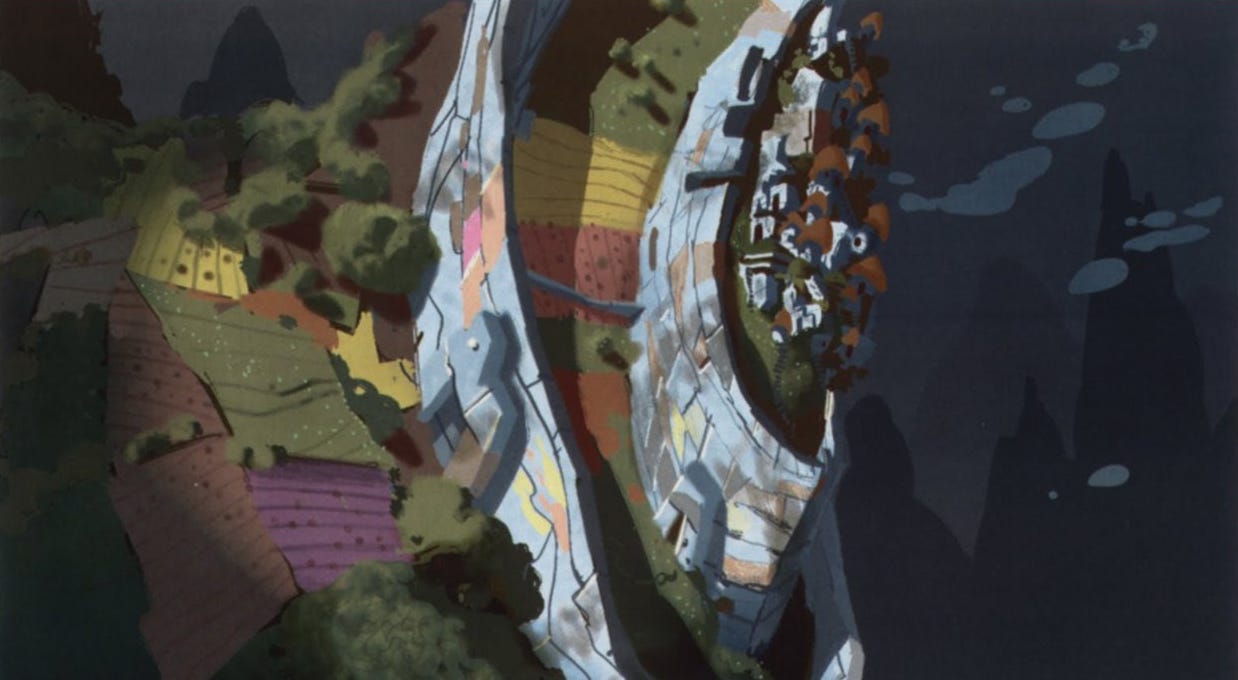
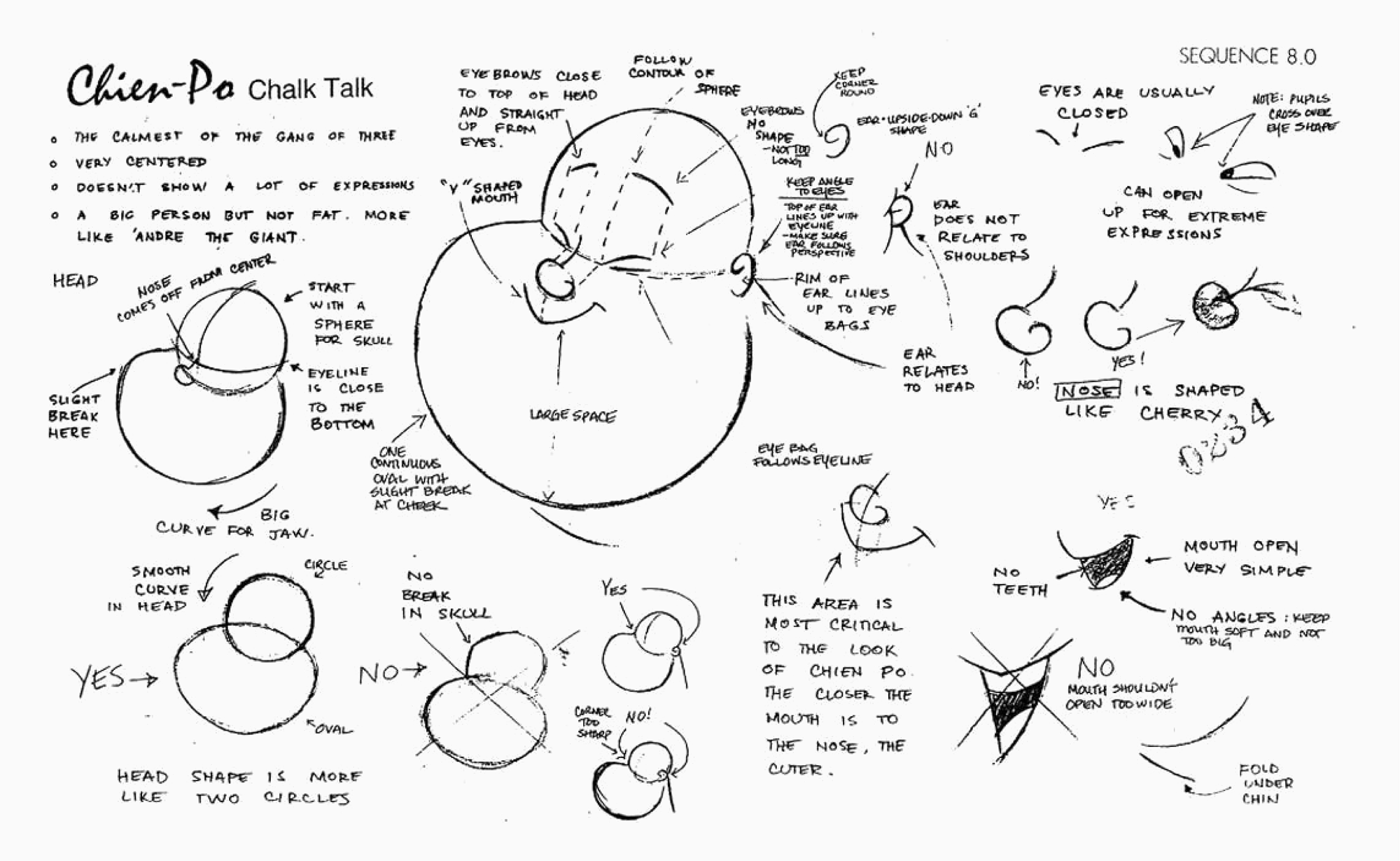
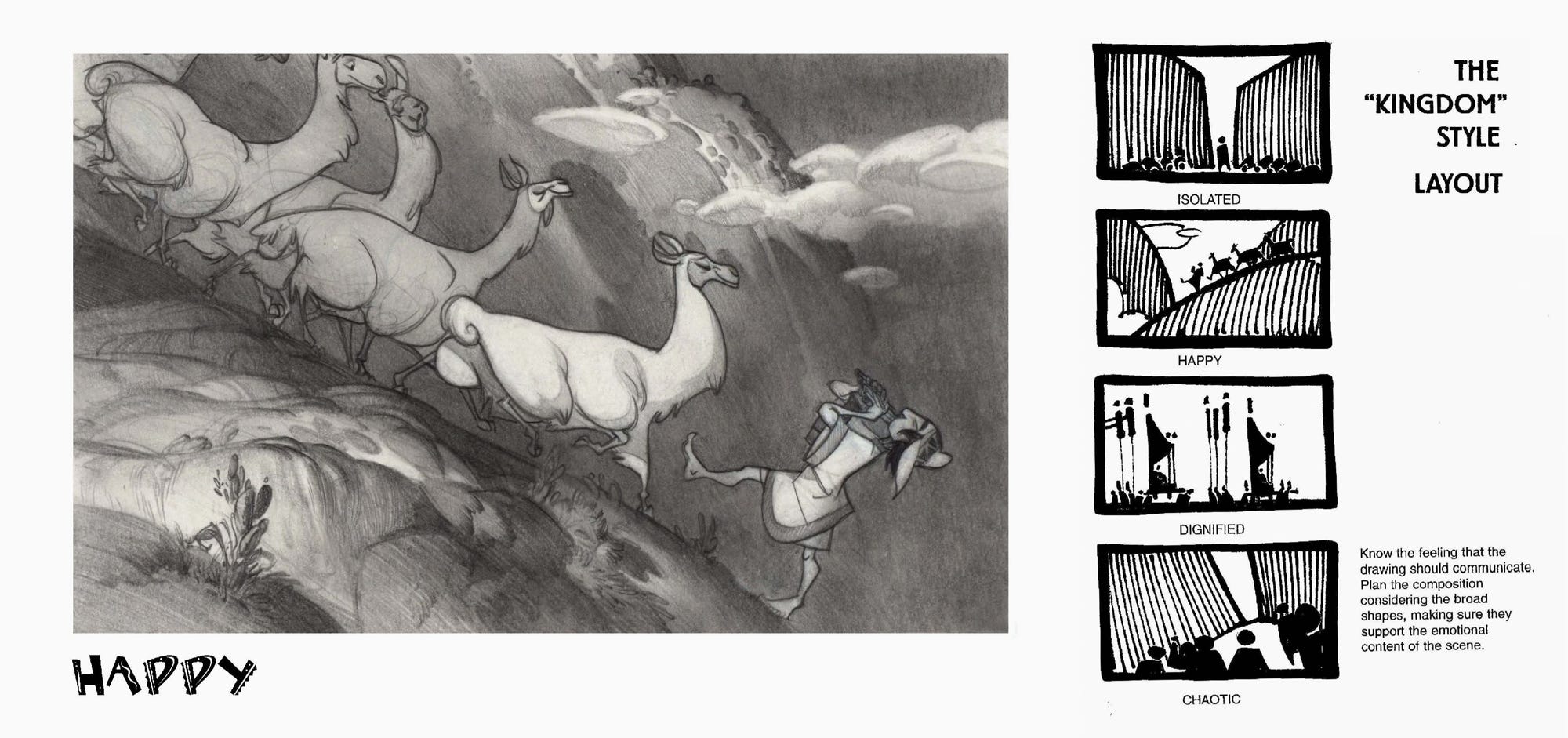
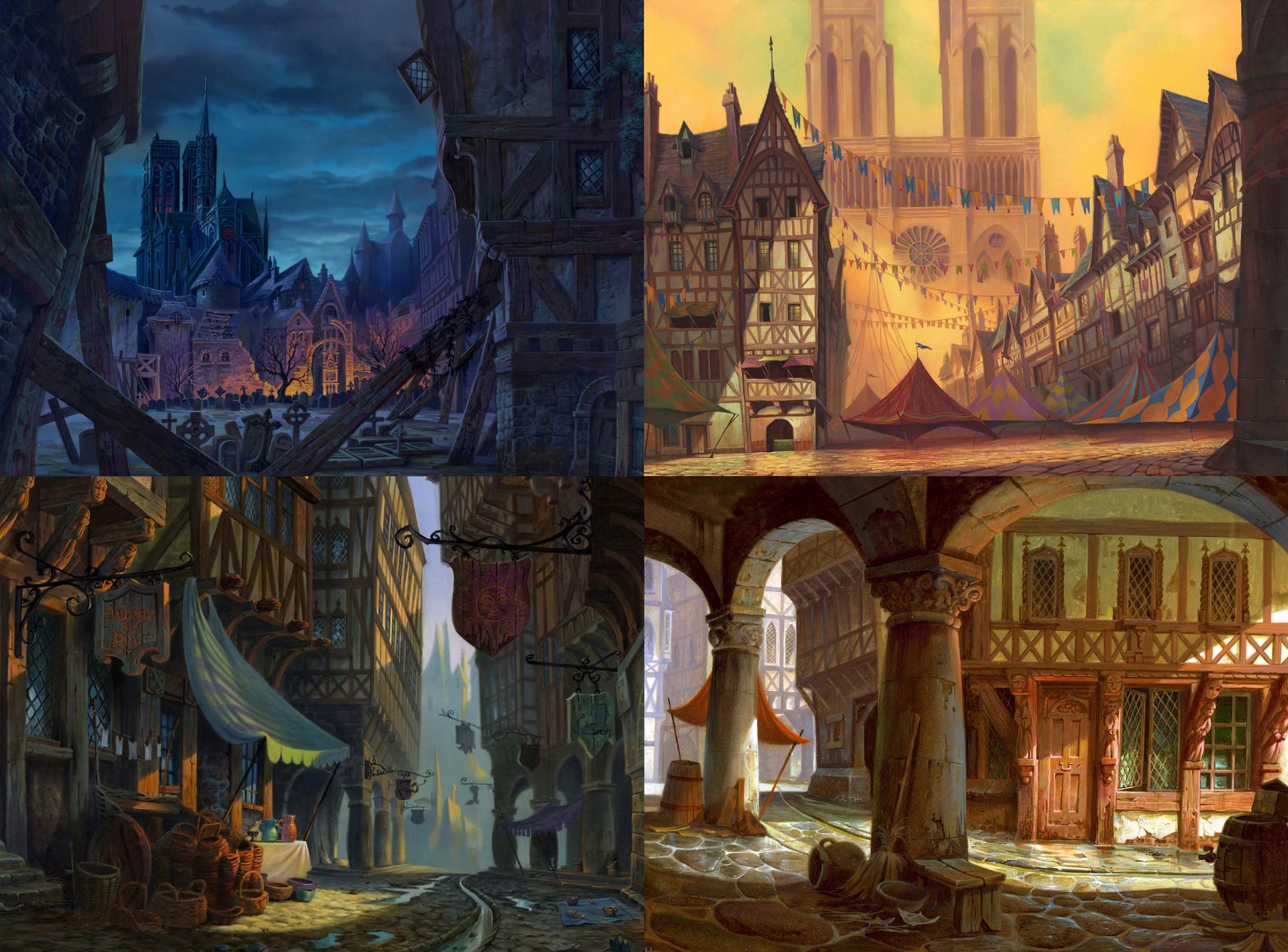
Not enough people know what’s happening on Jazno Francoeur’s LinkedIn account. He’s a former Disney artist from the ‘90s and ‘00s — and, for a while now, he’s shared rare art from the studio.
Those sit alongside the model sheets, the concept art and all the rest. Francoeur’s account hosts great things, and he’s doing us all a service by putting them online.
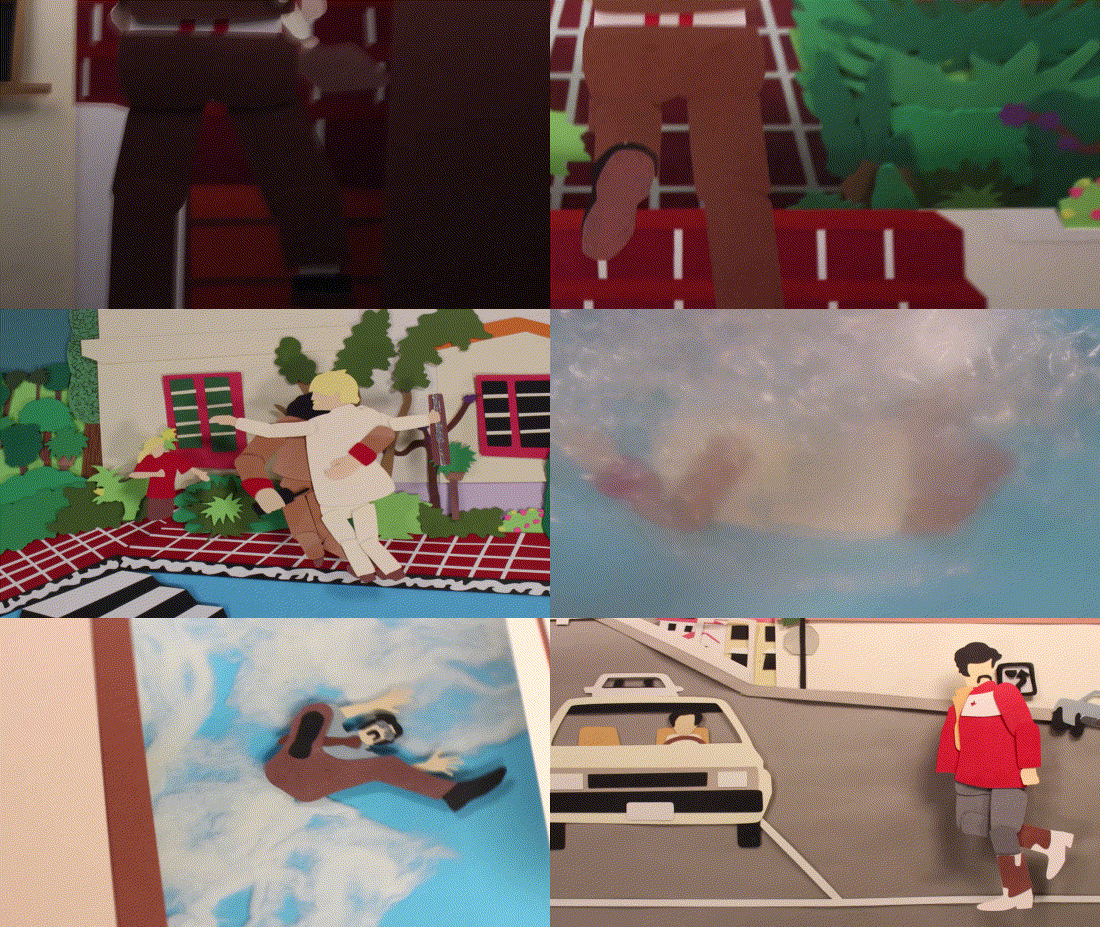
A few months ago, the animator Corduroy Frames posted his stop-motion, paper-cutout recreation of the Beastie Boys’ Sabotage video (watch). It’s a lot of fun, and it did the rounds online for good reason.
Less publicized is that Corduroy Frames documented the making of this video, step by step, in a 79-episode series on YouTube. As he explains in the first entry:
… I wanted to start doing stop motion, but I’d only done a few little things and I didn’t really know what I was doing. I figured by recreating something, that would teach me a lot about how things moved, how to have things interact, how to learn different effects. And so I decided to do Sabotage by Beastie Boys. Because A, Beastie Boys are my favorite band ever, and B, Sabotage is kind of like a cartoon anyway. So, I decided to start at shot 1 and go all the way through to shot 129. The goal is to see improvement of the stop motion from the first shot to the last shot.
A snippet from the final video, including the shot in the timelapse below
You watch it happen. During shot 60, he talks about his realization that human hips sway while walking, which he began incorporating from there. For shot 76, he needed a character’s hand to disappear inside a jacket, and so he discovered a way to create that illusion by using “smaller and smaller pieces” of paper.
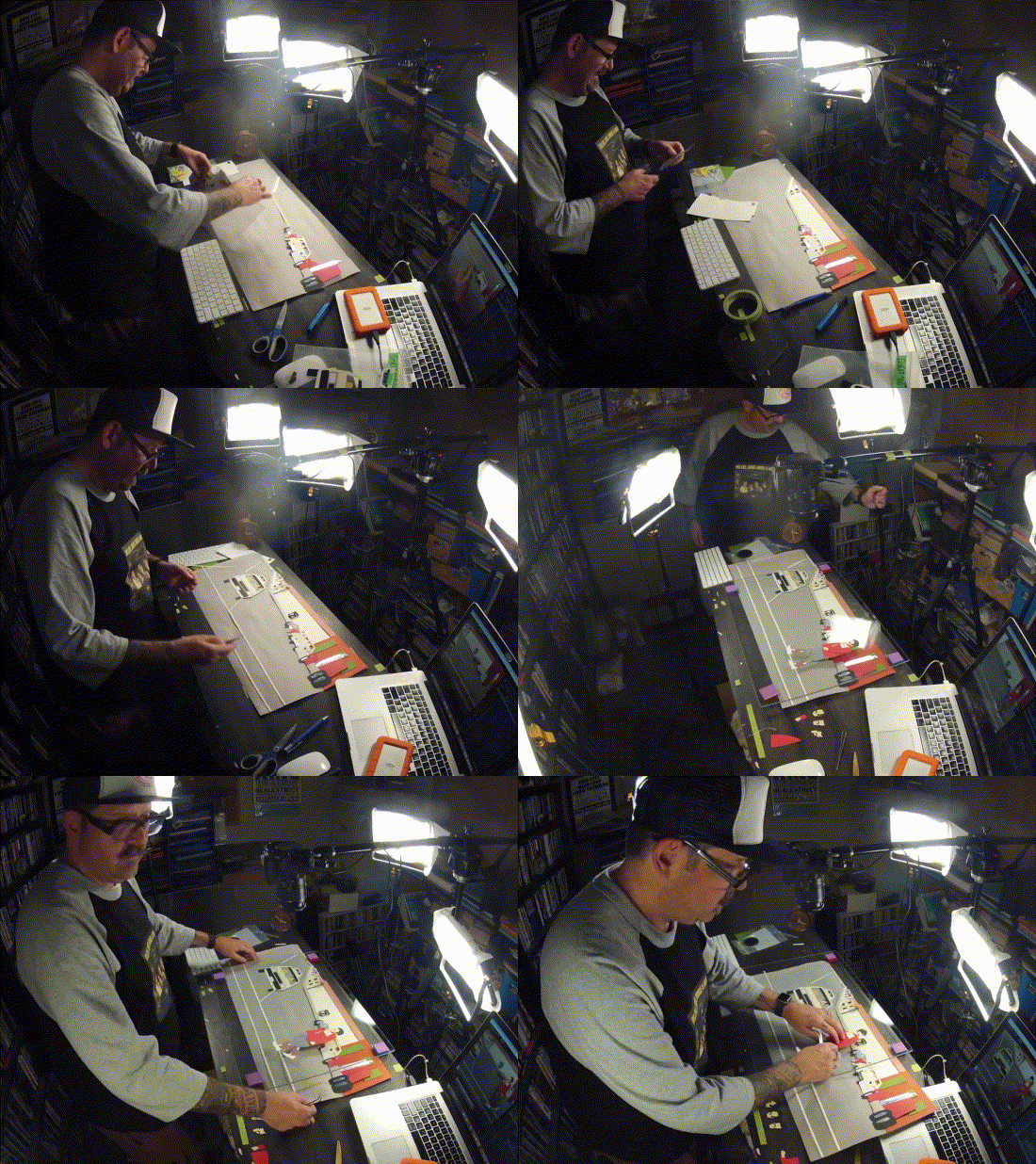
Corduroy Frames was learning during this process, but watching it play out is inspiring and educational in itself. Taking the project one step at a time, with a few mundane and often homebrew tools (like a plexiglass sheet placed atop Lego-brick columns for shot 17), he built something compelling. With his Sabotage remake and the 79 videos that preceded it, he showed what’s possible.
A timelapse of Corduroy Frames at work on shot 60, part of his 34th episode
1.3: Caroline Leaf’s workshops
You might know the films of Caroline Leaf — and you’re definitely familiar with films she inspired. Most festival-circuit animation today owes techniques and tics to Leaf’s work from the late 20th century, done in sand and paint and more. (See her Kafka sand film, for example).
Over the years, Leaf has passed down her knowledge. And, back in the ‘90s, some of her workshops were captured in a documentary called Hand-Crafted Cinema (1998), which is freely available online.
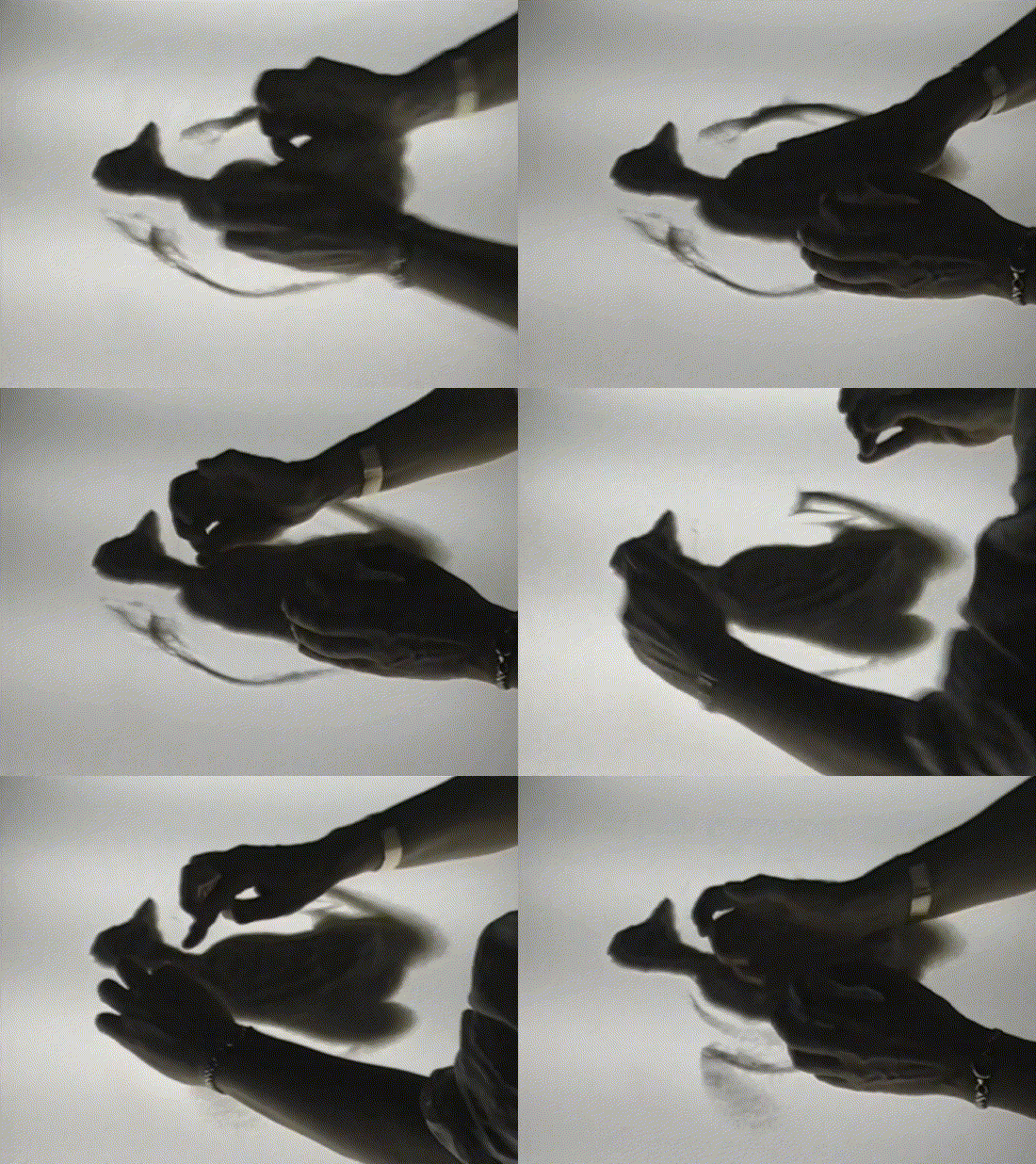
Leaf always had a knack for sand, and that’s the first method demonstrated. We watch her shape sand on a light box and explain how, in this kind of animation, you “always redraw an image before you erase it.” Both her descriptions and her hand movements casually reveal things that took her years to learn.
Then she shifts to paint-on-glass animation, and cutouts, and the scratching of drawings onto blank film stock. These, too, she’d used in her films. In 35 minutes, Hand-Crafted Cinema offers a master class from one of the most influential living animators, focused on all of her specialties. It’s extremely valuable.
Caroline Leaf working with sand in Hand-Crafted Cinema
1.4: Aaron Blaise’s animal drawing
The look of animated animals in the ‘90s and early ‘00s was defined, in no small part, by Aaron Blaise. He’s an ex-Disney artist whose contributions to films like Aladdin and Beauty and the Beast are recognizable at a glance. These days, his main focus is teaching.
Blaise’s YouTube channel has existed for close to 14 years and has a large following, but it’s worth mentioning again how helpful it is. He’s drawn animals since childhood — it’s his love. “When I went to art school, I wanted to be an illustrator. I wanted to work for National Geographic. My big dream was nature- and natural-history-type illustration,” he told us last year.
Everything he’s learned across the decades, he discusses on YouTube.
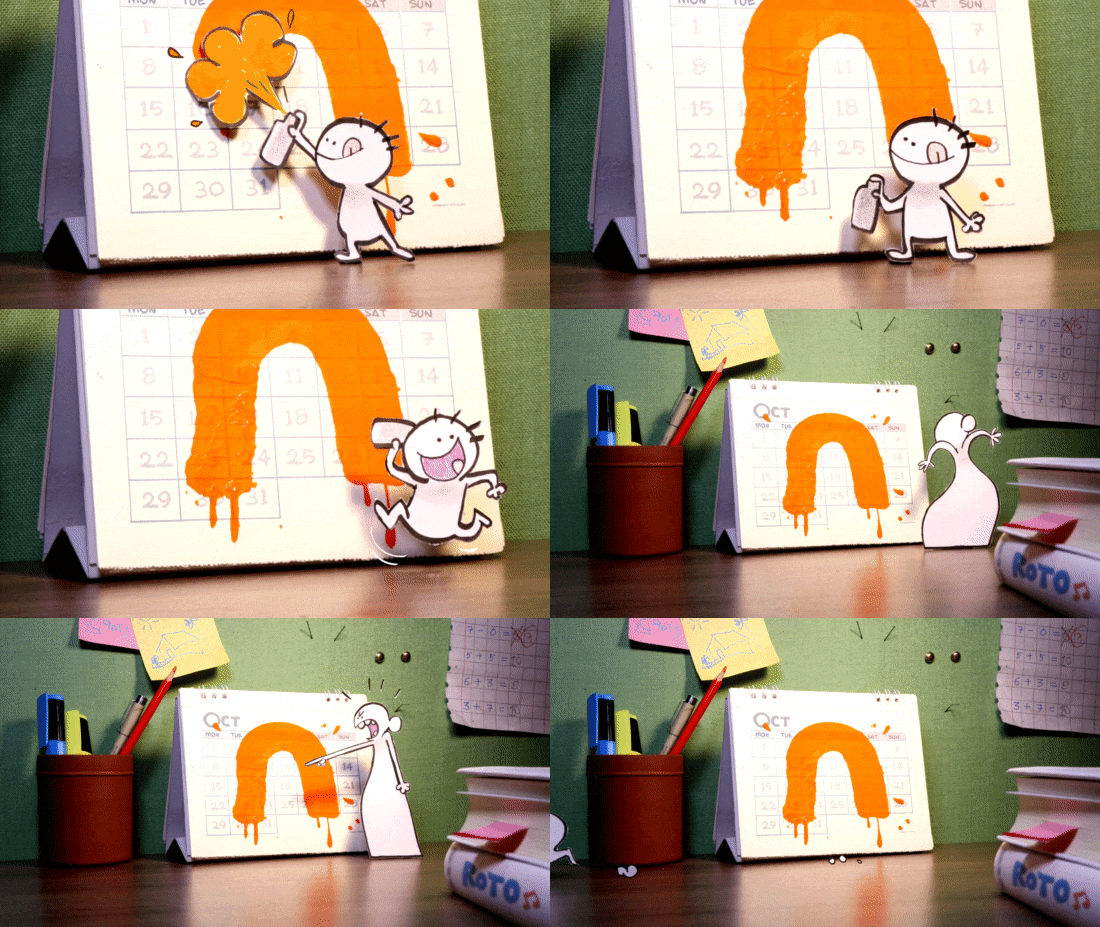
It’s rare for animation to cross over like Vaibhav Studios’ bumpers for Nickelodeon India do. In fact, one of them appeared in our biggest tweet of all time. The reason is pretty obvious: these things are charming, funny and really, really ingenious.
Years ago, the studio’s Vaibhav Kumaresh told us that the pitch for these was “something entirely handmade, crude and non-digital.” Nickelodeon India went for it, and the bumpers that followed were undeniable. If you’ve seen the cutout wonders of Mom and Brat, or the rap battle between Indian street foods, or the rock band composed of actual rocks, you get the appeal.
And, crucially, Vaibhav Studios showed the making of these bumpers (and others) in a playlist of YouTube videos.
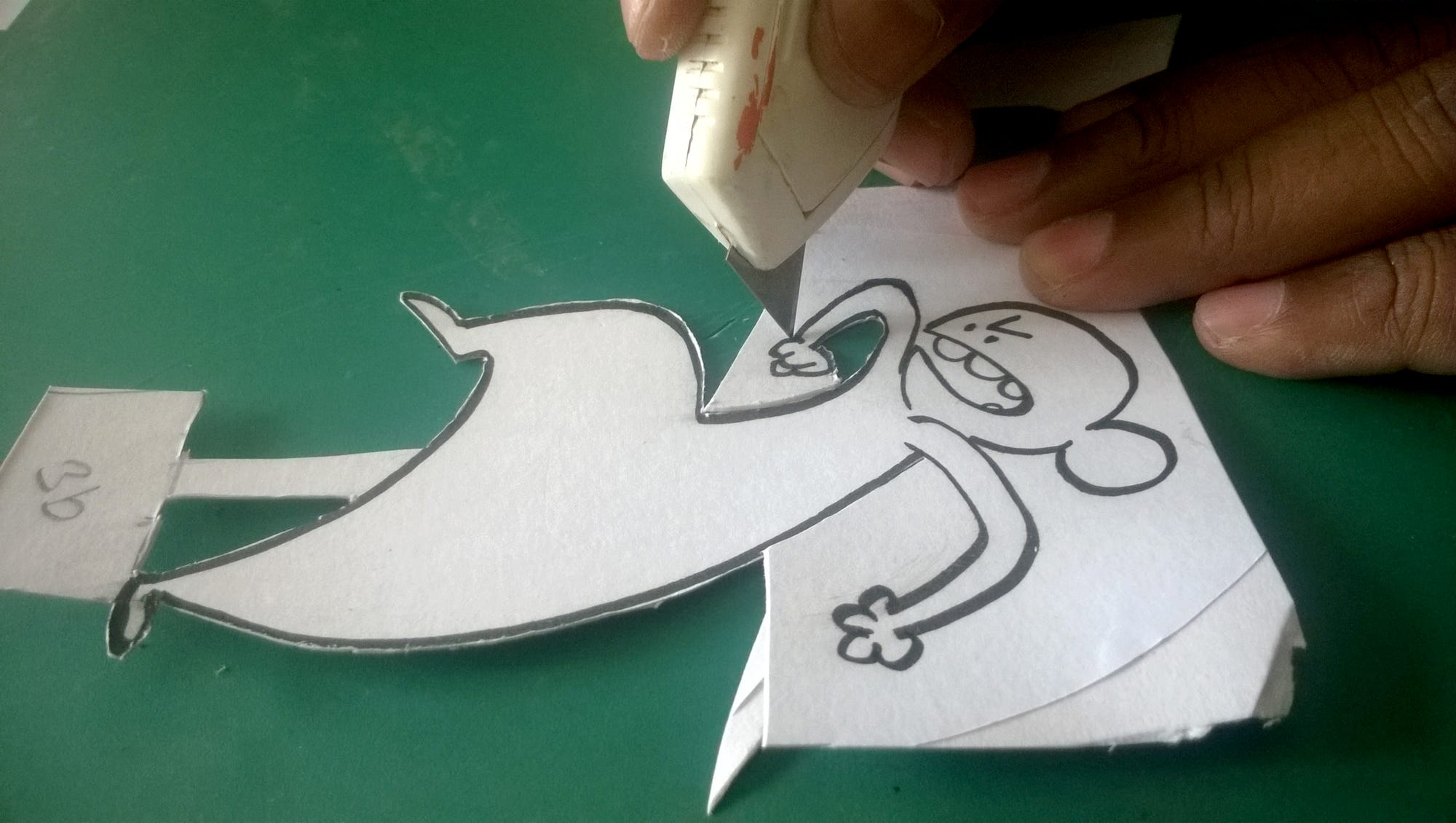
A photo of the cutout process, courtesy of the studio
Each making-of video is short, and what’s happening isn’t explained in depth. Look carefully, though, and the details are present. You can see the exact stop-motion cutout tricks behind Mom and Brat, and how the studio’s food characters are often live puppets overlaid with animation. There’s the creation of Egg Opera, with its custom stage and its plaster-of-Paris-filled eggshells — and so on.
It’s more animation done with minimal means. A lot of people have access to the stuff used in these videos. That, in fact, is partly why the bumpers are magnetic. Couple their relatable homemade-ness with the endless imagination and humor of the Vaibhav team, and it’s magic. Through these videos, anyone can watch how the artists did it, and learn.
Those are our five resources today! Hope you’ll find them interesting. As mentioned, you can look through the previous volumes of this series, stretching back to 2022, right here.
2. Animation news
2.1:Electro Andes gains traction
A still from Electro Andes
We commissioned this news feature from writer-illustrator Malu Mirones. After catching the first episode of a rising Argentinian series, she interviewed one of its directors for us and put together the following report. Huge thanks to her for the great work.
In June, talents from across the animation world attended the Annecy Festival. Among them were Nacho Malter and Damian Fernandez from Argentinian studio Bellolandia, who brought along the first episode of their cyberpunk series Electro Andes.
It wasn’t the team’s Annecy debut. In 2023, they took their show’s concept teaser to the festival. Three years later, they were back to screen the full, half-hour pilot at MIFA and the Les Nemours Theater. The audience’s response was overwhelmingly positive, according to Nacho Malter, and there was a lot of traction on social media (YouTube, TikTok). Over a call, he describes the difference in experiences between 2023 and now:
Well, we noticed a different kind of attention from the industry. There’s a certain level of respect. It’s not the same to say you have a project you want to develop and to actually have it developed, to have the pilot done. There’s a phrase along those lines, about how you have to become inevitable, and in this case it felt like we had accomplished that, like we weren’t making promises anymore. We had something to show.
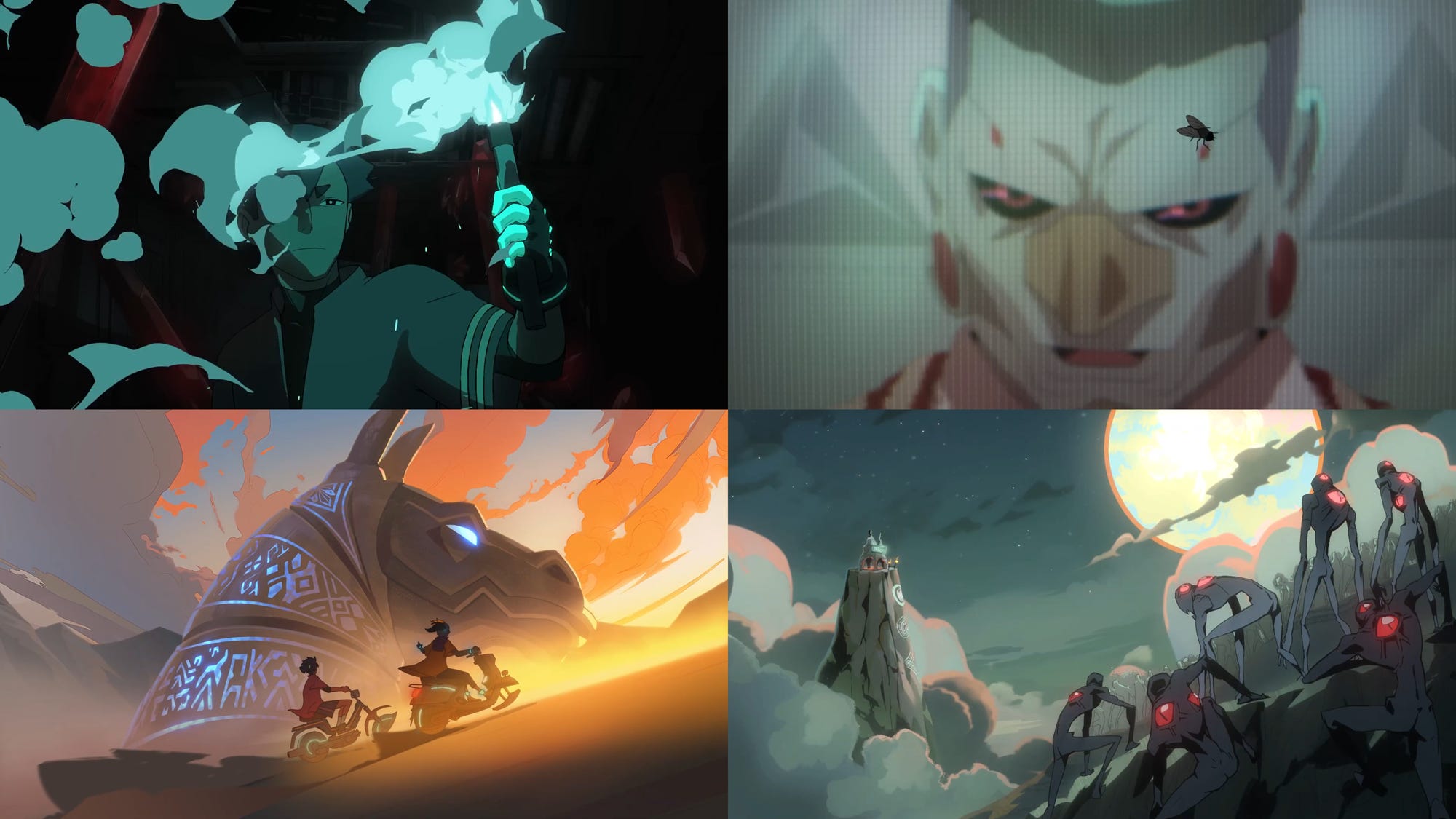
The Electro Andes pilot follows brothers Cal and Pietro, orphans in a futuristic Andean mining town, desperately searching for their grandfather. Their world is colored by an oppressive mining company, an underground revolutionary movement and creatures from Andean mythology.
Every scene in the pilot fleshes out the characters and the world, and, most importantly, makes viewers care. A football sequence, for example, establishes the brothers’ dynamic, the world’s sci-fi tech and the story’s Latin American DNA. Malter and Fernandez noted during their Annecy panel that people behind the scenes repeatedly told them to cut this moment, but that they insisted on its importance.
It’s tied to a major reference point for Electro Andes: the real-world mining town of La Rinconada in Peru. Malter describes it as a harsh and unforgiving place, with one exception: “in the middle of that environment, there’s a little football field, which is like this final space of intention this town has.”
Stills from Electro Andes
Bellolandia aimed to balance the horror and tragedy of Electro Andes’ story with the characters’ humanity and resilience to make people root for Cal and Pietro. This message of resistance is relevant to both cyberpunk as a genre and the Latin American roots of the show. Malter sees a natural connection between the two:
Cyberpunk and the realities of Latin America have a lot of dystopian points in common, where a lot of times the abuse of power from corporate and governmental institutions is very present in day-to-day life, and these are key themes in the genre that connect with reality. So, from that point, it was a very organic fusion.
The result is refreshing and captivating. It occasionally feels like audiences “expect” a certain type of art from underrepresented communities, who are sometimes judged as cultural ambassadors under an unforgiving lens. Electro Andes’ creators took great care to tell a story that felt right and real to them, knowing that there is no such thing as “perfect” representation.
The show takes inspiration from both reality and mythology, while also remaining flexible for the sake of the project’s purpose: to tell Cal and Pietro’s story.
“When you’re developing a world, there’s an infinite number of directions you can take,” Malter notes, “and characters end up being the way to find your focus.”
Making an original series is often a luxury only mainstream studios can afford. Doing it independently hasn’t been easy, especially in the underfunded Latin American industry, but Bellolandia has written its own playbook. Electro Andes began with a remote crew spread across multiple Latin American countries; eventually, the team opened a physical studio in Buenos Aires.
They converted a residential home into a workspace, so production occurred quite literally “in-house.” Malter feels that in-person interaction in a set location was extremely valuable, despite mainstream industry trends leaning towards remote work. As he says:
I think it has huge benefits. I don’t think so, I lived it; I experienced them all over again building this space. ... For me, there’s a cost in [remote work], a loss in human synergy, in shared spaces, in the opinions on shots that are being worked on live, in the collaboration of, “Oh, you’re doing that shot? I have these assets from another one.” You lose a lot of richness working remotely.
Based on the season trailer for Electro Andes, much more of the story remains to be seen. Since Annecy, the team has been searching for VOD distributors to finance the remaining episodes and give the series a platform. In the meantime, the pilot is set to premiere on YouTube in September.
One thing made clear at Annecy this year was the importance of indie projects, and the public’s desire for them. Electro Andes is exactly the kind of show audiences want, and hopefully it will get the support it needs (either from major investors or through the upcoming Kickstarter campaign for the second episode) for Cal and Pietro’s story to fully unfold. MM
Malu Mirones is a Panamanian writer and illustrator with a passion for visual storytelling, folklore and fairy tales. She studied Media, Culture and Communication at NYU, where she was also a writer and editor at CommClub, and most recently she attended IDEA Academy in Rome to study visual development. If you’d like to collaborate or just chat about the many wonders of storytelling, reach out at malumirones@gmail.com
2.2: Newsbits
Six early Mexican cartoons were restored in 4K and will screen at the Foro Internacional de Cine soon. All were created at AVA Studios in Mexico City during the 1930s. See a trailer here.
In America, researcher Jacob Pruitt has preserved and shared a huge cache of archival material from the NYIT Computer Graphics Lab, one of the birthplaces of computer animation. Check it out on the Internet Archive.
In Russia, Leonid Shmelkov’s Restlessness had an opening of 12.5 million rubles at the box office — strong for an arthouse film with an adult rating. (Its budget was reportedly 116 million rubles.)
Animator Alisa Shadrina, based in Georgia, released another of her strange, unique and hypnotic animations on YouTube.
Meanwhile: another really clever and funny sponsored film by India’s Eeksaurus, this time for Adobe. Check it out on YouTube.
In Japan, director Sunao Katabuchi argues that the massive growth of the anime industry has been bad for its health, and points to the collapsing infrastructure behind the scenes.
This past week brought the day (August 4, 2026) when Ray Bradbury’s post-apocalyptic story There Will Come Soft Rains takes place. That’s a good excuse to watch the classic Uzbek animation based on it — available on YouTube.
The pilot for Wolik, animated in Russia during the first half of the ‘90s, surfaced on YouTube in high quality. Artist Harald Siepermann contributed character designs and more to the project.
Thanks for reading today’s issue! As usual, we’re wrapping up with personal comments from the two of us:
John:Puppet animation is a love of mine. And, over the past few years, I’ve grown fascinated by the thoughtful philosophies that some puppet animators have about their work. So it was a special joy to get insights from Barry Purves, one of the living masters in the field, for a recent issue. He’s really eloquent about what he does (just look at this YouTube interview), and I feel like any puppet animator could benefit from studying his thinking and performances (like in Tchaikovsky, An Elegy). I’ve been learning a lot.
Jules:On the topic of Aaron Blaise’s videos, I’ve been watching them myself these last few weeks. I really enjoy exploring different logical frameworks for drawing in my own work, but one that I’ve never felt like I fully grasped was the Disney (or Looney Tunes) approach to drawing cartoon animals. Seeing the way Blaise tackled drawing Beast from Beauty and the Beast helped drive home that the purpose of this system isn’t just to design a character and then reverse-engineer it into basic shapes. It’s to create a repeatable formula of progressing through a drawing using a combination of guidelines, basic shapes and anchor points (like noses) — and to design characters whose features can be placed with such a formula — while keeping in mind the three-dimensional relationships of all these elements. It was a huge help!
 Log in